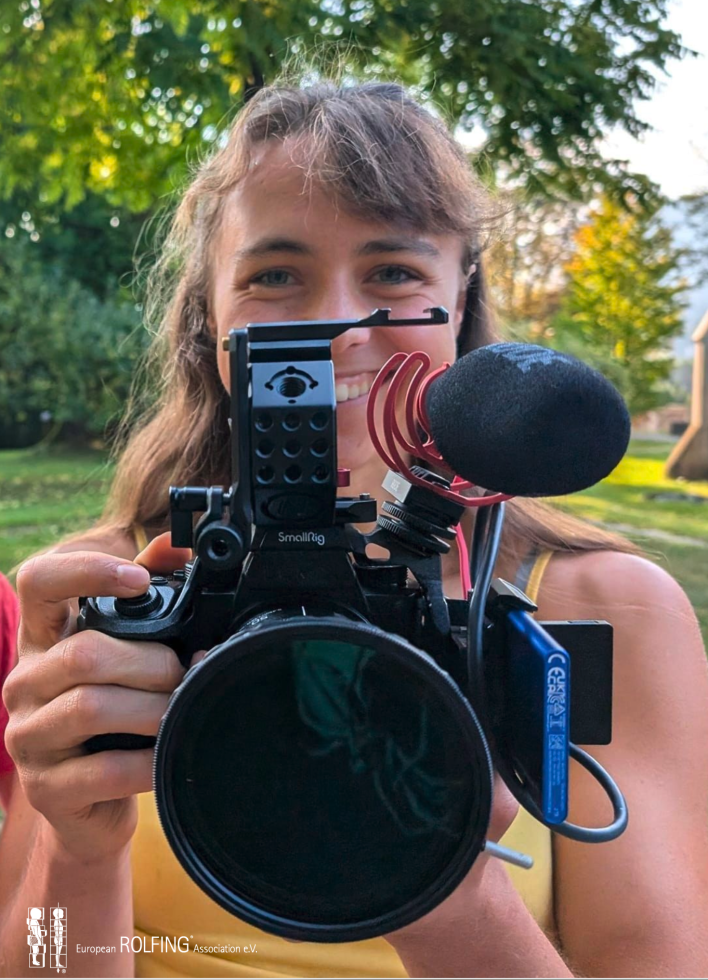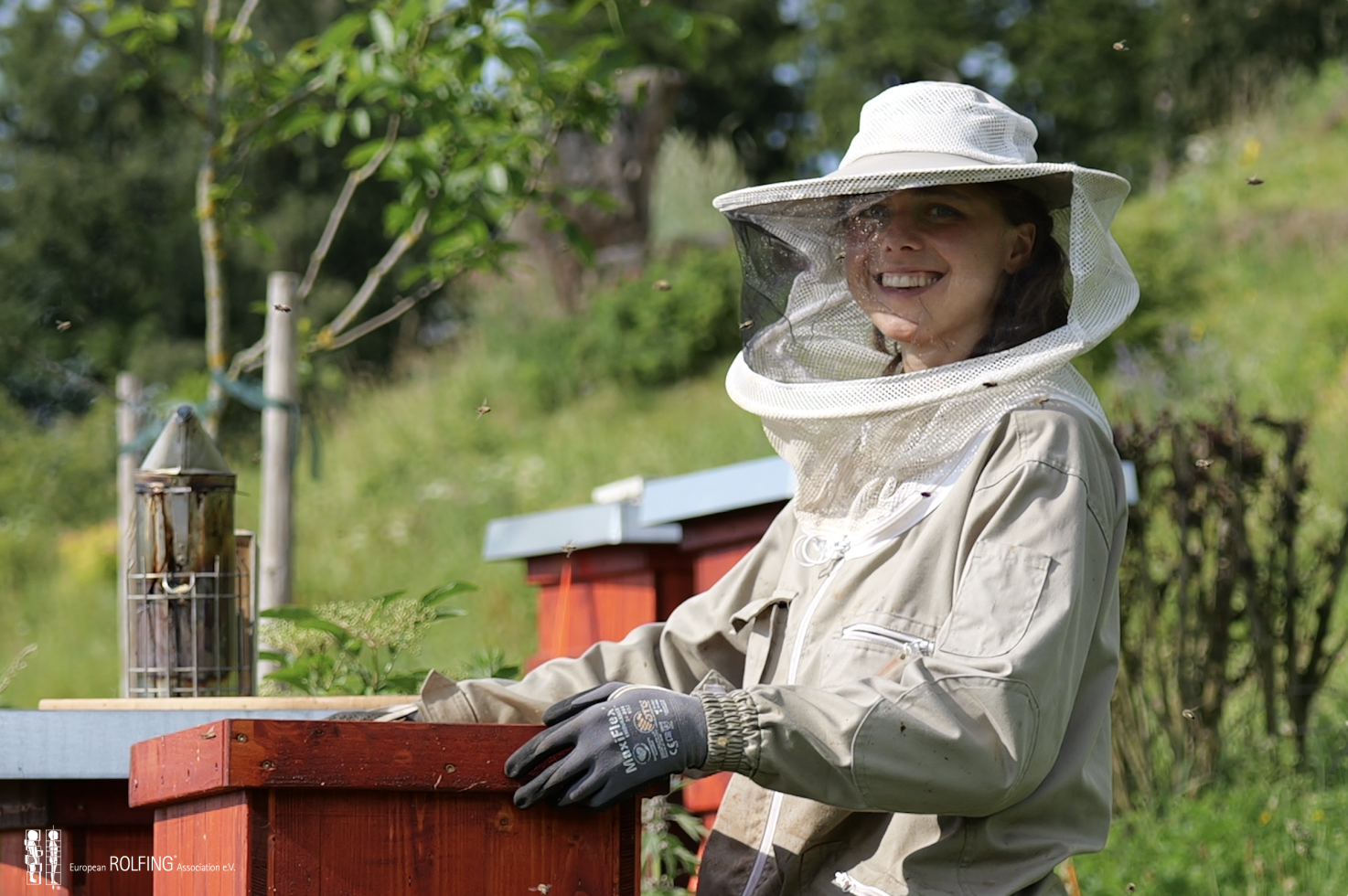

I am a Rolfer® and a marketing agency owner, and I live and work on a small permaculture farm.
What was your original career before Rolfing® Structural Integration?
Already as a child I was very interested in natural sciences and I always loved to be outdoors, so after school I studied biology with a focus on ecology and human biology.
During my work in nature conservation, I explored different ecosystems and became particularly interested in how even small and often overlooked organisms and landscape elements play an essential role in the functioning of the whole system.
At the same time, I was drawn to questions around human physiology and anatomy, how the body itself functions as a complex, interconnected system and how this relates to fitness, health and wellbeing.
I became increasingly aware of how sensitive and vulnerable these systems are, both in nature and in the human body. As a result, my family and I decided to move to the countryside, to grow our own food, spend more time outdoors and to create a habitat for animals and plants according to the principles of permaculture.
Meanwhile, I developed a strong interest in public outreach and how information is conveyed through websites, visual media and digital formats. One reason for this was my growing awareness that many relevant topics often receive too little attention or are not perceived as important, simply because they are not communicated in a way that makes their significance visible.
This interest continued to evolve and is now reflected in my work in our agency, where I focus on making complex topics and solutions understandable, accessible and relatable.
Why did you decide to pursue Rolfing® as a career?
During my time at university, I began to develop symptoms of fibromyalgia, which intensified over the following months. What followed was a longer period of searching for ways to relieve the pain.
Eventually, I found the Rolfing method. Already after the first session I noticed a clear and lasting improvement. During the 10-session series, I not only experienced changes in my body, but also began to better understand what was happening.
Over the following years, Rolfing Structural Integration in combination with movement, functional training and a growing awareness of my body helped me return to a pain-free life. This change has remained stable ever since. At the same time, my physical capacity in everyday life and sports increased significantly, and I developed a much stronger sense of confidence and connection to my body.
This experience ultimately led me to change direction and train as a Certified Advanced Rolfer® at the European Rolfing® Association in Munich.
Since then, my fascination for working with people has continued to grow. What I value most is the diversity of this work. Each person brings their own history, their own patterns, and their own way of moving."
Rolfing Structural Integration can help to make these patterns more visible, to create space for change, and to support development over time. Being able to accompany people in this process is something I deeply value.
How do you find working in two professions?
Over time, my professional life has evolved and expanded. Today, my work with businesses, my work as a Rolfer®, and my life on the farm complement each other in a way that feels both natural and coherent.
Through my background in biology and our work with natural systems, whether in the soil, with plants, or in beekeeping, I continue to engage with the question of how systems develop, adapt, and sustain themselves over time.
In my work with companies, I apply similar principles in a different context. It is often about creating clarity, making complex work understandable, and structuring things in a way that supports development.
Rolfing Structural Integration remains an important part of this overall picture. It allows me to share what I’ve learned about the human body with my clients, while at the same time continuing to learn from this work myself. It has shaped how I relate to my own body, how I train, how I recognize early signs of strain, and how I respond to them."
What connects all these areas is not so much the specific profession, but a shared way of working: observing patterns, understanding relationships, and creating the conditions that allow change to happen.
Author: Certified Advanced Rolfer®, Romana Netzberger - Austria
Editing: Sabine Becker
Photos: Matthias Amon, Heinz Binder and Wild Europe e.V.
More information on how to become a Certified Rolfer®.
Learn more about Rolfing.
Find a Rolfer near you.
Want to know more?
Sign up for our newsletter and receive regular information about Rolfing® Structural Integration.